Roadside Kits
The wrong roadside kit looks complete on a product page and useless when something actually goes wrong.
Most drivers do not need the biggest kit with the longest checklist. They need a kit that fits the car, fits the trunk, and covers the problems they are most likely to face: low visibility, flat tires, short roadside stops, bad weather, and basic breakdown situations.
Quick Take
If you want the shortest route to the right choice, start here.
- the best kit is usually the one you will actually keep in the car
- storage matters more than oversized checklists
- a few useful tools beat a box full of filler
- winter driving and long trips justify more gear than daily city driving
Pack for Real Problems
The best roadside kit helps with the problems drivers actually face, not the ones marketers like to list.
Buy for Storage
A big kit is not automatically better if it takes too much space or never stays in the car.
Think by Season
What works for short summer drives may not be enough for winter, road trips, or remote routes.
Pack for Real Problems
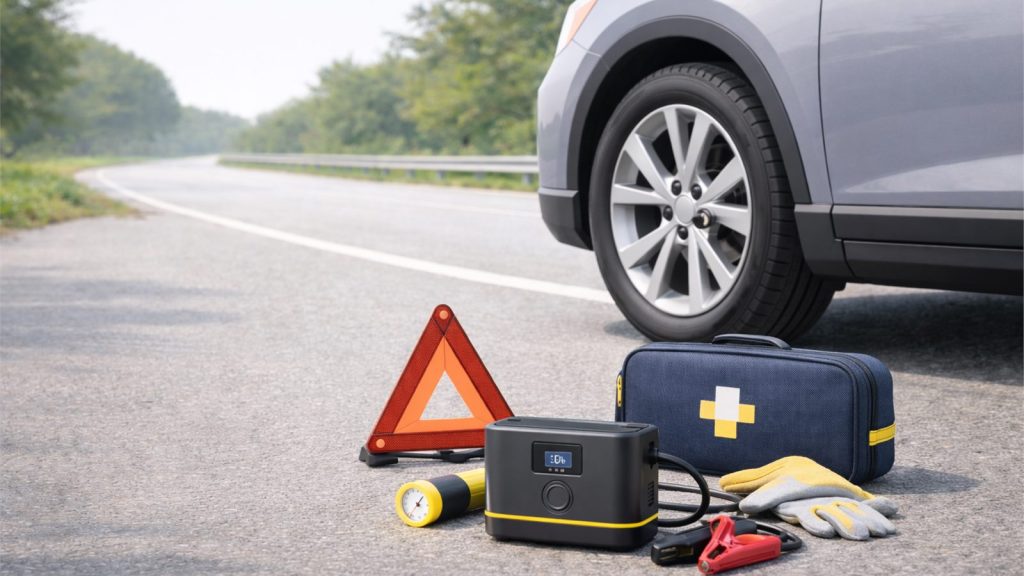
A good roadside kit should prepare you for what actually happens, not what looks impressive on a product listing. For most drivers, that means visibility, lighting, tire support, gloves, basic tools, and a storage setup that does not become clutter.
The smartest kits are usually practical, not bloated. If half the contents are cheap filler, the kit is bigger without being more useful.
Storage Is Part of the Decision
A roadside kit that takes too much space often ends up moved, ignored, or left at home. That makes storage part of the buying decision, not an afterthought.
For smaller cars, compact kits usually make more sense. For larger vehicles, family travel, or road-trip use, it can be worth carrying a more complete setup as long as it still stays organized and easy to reach.
Seasonal Use Changes What Matters
A roadside kit that feels fine in mild weather may not be enough in winter, on longer drives, or in areas where help takes longer to reach you. Seasonal driving changes the level of preparation that makes sense.
If you mostly drive short city routes, a lighter kit may be enough. If you drive in colder weather, on highways, or in remote areas, you should think beyond the basics.
What to Buy First
Start here if you want the fastest route to the right kind of roadside kit.
- Best Roadside Emergency Kits for Cars
- Best Car Emergency Kits for Winter
- Best Roadside Kits for Road Trips
- Best Compact Emergency Kits for Small Cars
What to Read Next
Use these reviews if you already have a kit in mind and want to know whether it is actually worth keeping in your car.
- Lifeline AAA Road Kit Review
- Everlit Roadside Emergency Kit Review
- First Secure Car Emergency Kit Review
- Autocastle Emergency Roadside Kit Review
Buying Advice
Use these guides if you are still deciding what belongs in a roadside kit and how much gear makes sense for your car.
- What Should Be in a Roadside Emergency Kit?
- Roadside Kit vs DIY Car Emergency Kit
- What to Keep in Your Car for Winter
- How to Store Emergency Gear in Your Trunk