Airmoto tire inflator review: if you want a compact cordless inflator for routine top-ups and emergency backup, Airmoto is one of the most visible options in this category.
It is designed around portability and low-friction use: rechargeable battery, digital pressure display, preset PSI workflow, and auto shut-off. For everyday drivers, that sounds attractive because it removes cable clutter and can stay ready in a glove box or trunk organizer.
The key question is not whether it can inflate tires at all. The key question is whether its real-world fit matches how you actually drive: quick top-ups, occasional low-tire events, and moderate use patterns versus repeated heavy-duty sessions.
This review is based on public specifications and brand-published information, not hands-on lab testing claims.
Quick Verdict
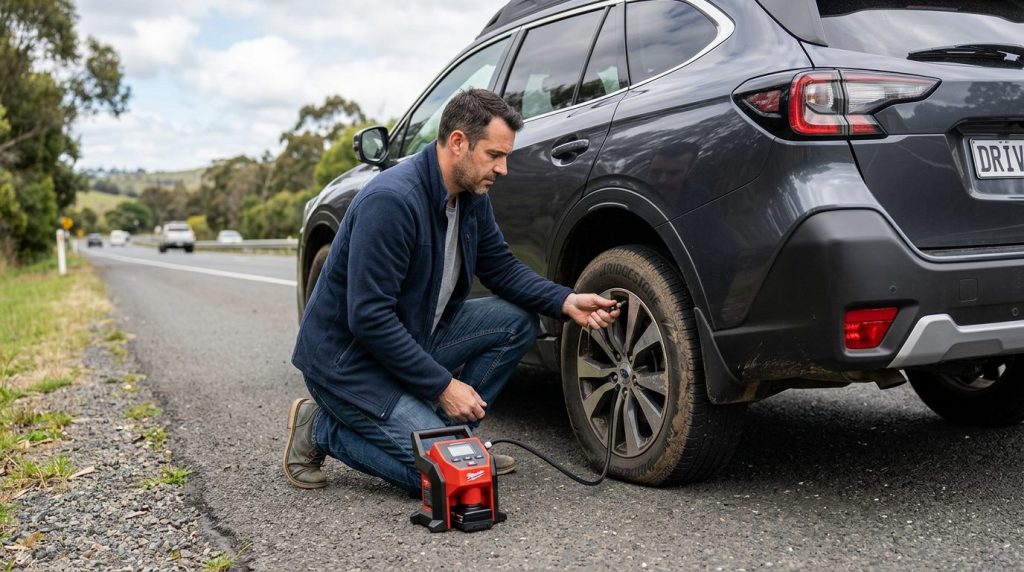
Short verdict: Airmoto appears best suited for drivers who want a small cordless inflator for light-to-moderate use and convenience-first storage.
- Best for: daily drivers, compact emergency kits, quick top-ups
- Worth considering if: you prioritize cordless portability over compressor-style output
- Likely a better fit elsewhere if: you frequently inflate larger tires from very low PSI or need repeated long sessions
- Main strength: compact convenience + simple auto-stop workflow
- Main trade-off: runtime/output limits are more noticeable in heavier use
Product Snapshot
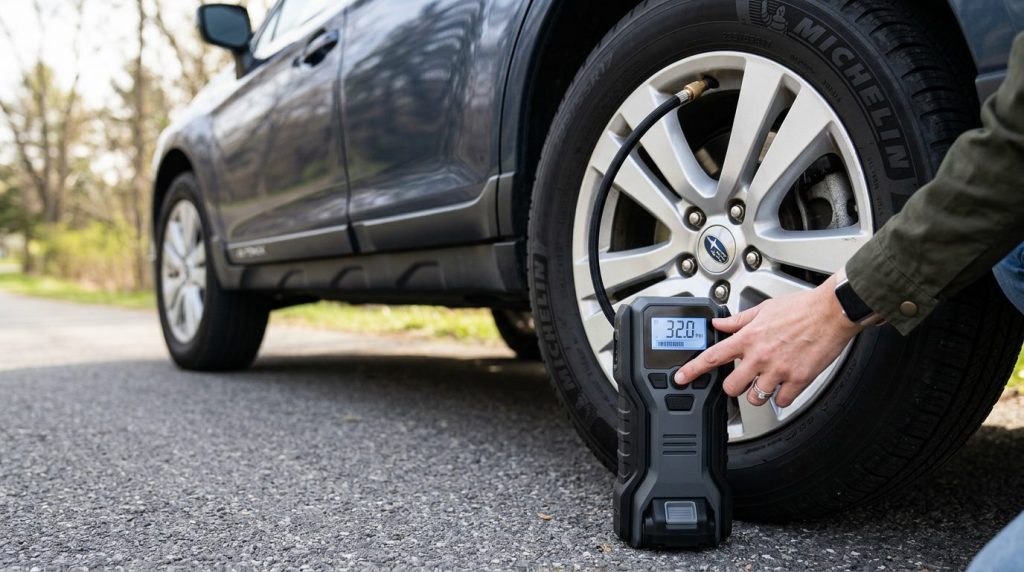
- Model: Airmoto Portable Air Pump
- Type: Cordless portable inflator
- Published max pressure: up to 120 PSI
- Battery: 2000 mAh rechargeable
- Charging input: 5V/2A
- Published weight: 1.25 lbs
- Published size: 2.4 x 1.6 x 6.1 inches
- Included accessories (published): hose, Presta adapter, needle adapter, general adapter, charging cable, carrying case, manual
- Noted by brand: not guaranteed for heavy-duty large truck/trailer/RV style conditions
Pros and Cons
Pros
- Compact form factor that is easy to store in everyday vehicles
- Cordless setup is faster and less annoying for routine top-ups
- Digital pressure workflow with auto shut-off reduces overfill guesswork
- Accessory kit supports multiple valve types and non-car inflatables
- Practical as a “keep-in-the-car” backup tool
Cons
- Cordless micro-inflators typically trade power consistency for portability
- 120 PSI headline does not automatically mean strong heavy-duty inflation behavior
- Runtime can be a limiting factor in repeated or demanding use
- Public pages show different charging-time claims, so expectations should stay conservative
- Likely less suitable for users who regularly handle larger tires under heavier load conditions
What Airmoto Gets Right
Airmoto’s strongest argument is convenience. Based on its feature set, it appears built for the exact moments when drivers want speed of setup more than maximum output: a tire that is low, limited time, and no interest in pulling out a bulkier 12V compressor.
The product size and accessory bundle also make it useful beyond car tires. For buyers who want one compact tool that can handle bikes, balls, and occasional car top-ups, Airmoto is worth considering.
For many normal drivers, reducing setup friction is what decides whether an inflator gets used consistently. On that point, Airmoto’s cordless design likely helps.
Where It Can Disappoint Buyers
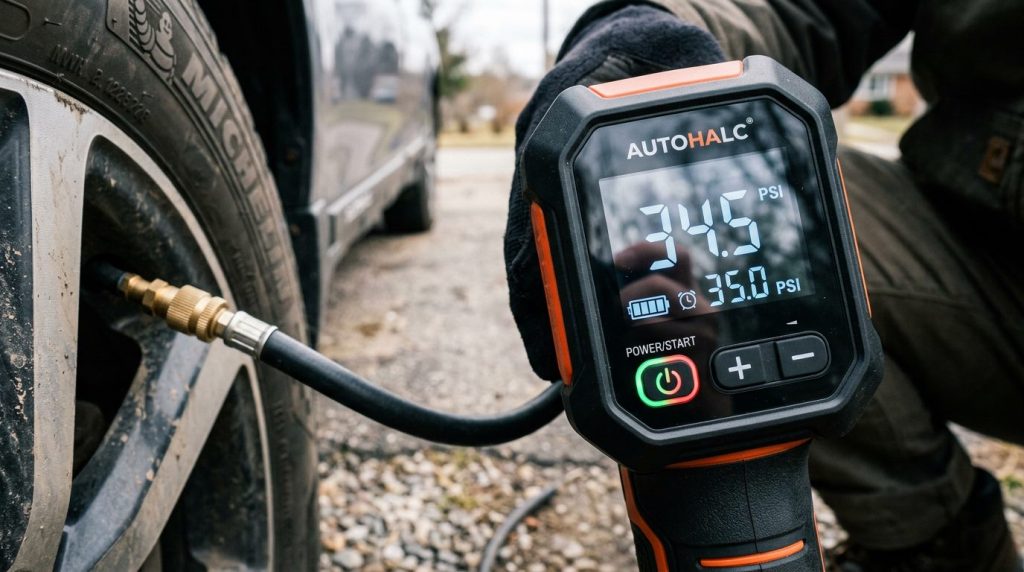
Most buyers get this wrong: they compare only PSI numbers.
In real use, portable inflator satisfaction depends on:
- how quickly pressure rises from your starting PSI,
- how long the device can run without frustration,
- and whether your tire size/use pattern matches the tool.
Airmoto appears best suited for maintenance-style usage and occasional roadside correction, not repeated high-demand inflation jobs. If your use is closer to “regularly recovering larger tires from very low pressure,” you are likely a better fit for a stronger 12V compressor-style unit.
Performance Expectations You Should Set
A practical expectation for Airmoto:
- Good fit: periodic top-ups, emergency backup, mixed small inflatables
- Moderate fit: occasional SUV use with realistic patience
- Poor fit: repeated heavy sessions, frequent near-flat recovery on larger tires, workshop-like duty
Another important point: brand pages and FAQ content can present different timing claims depending on where you read. That alone is a signal to buy for convenience and backup value, not for aggressive speed assumptions.
Ease of Use and Storage
This is where Airmoto likely delivers the most value for average buyers.
- Small body size helps with trunk or glove-box storage
- No power-cord routing around the cabin
- Auto shut-off and digital display simplify “set and fill” behavior
- Included adapters reduce extra purchases for mixed use
If your goal is “always have something ready,” Airmoto appears strong. If your goal is “finish big jobs quickly every time,” this category is usually the wrong class of inflator.
Who Should Buy It
Airmoto appears best suited for:
- Drivers who want a compact cordless inflator they’ll actually keep in the car
- Buyers focused on quick routine pressure maintenance
- Households that value portability and multi-use adapters
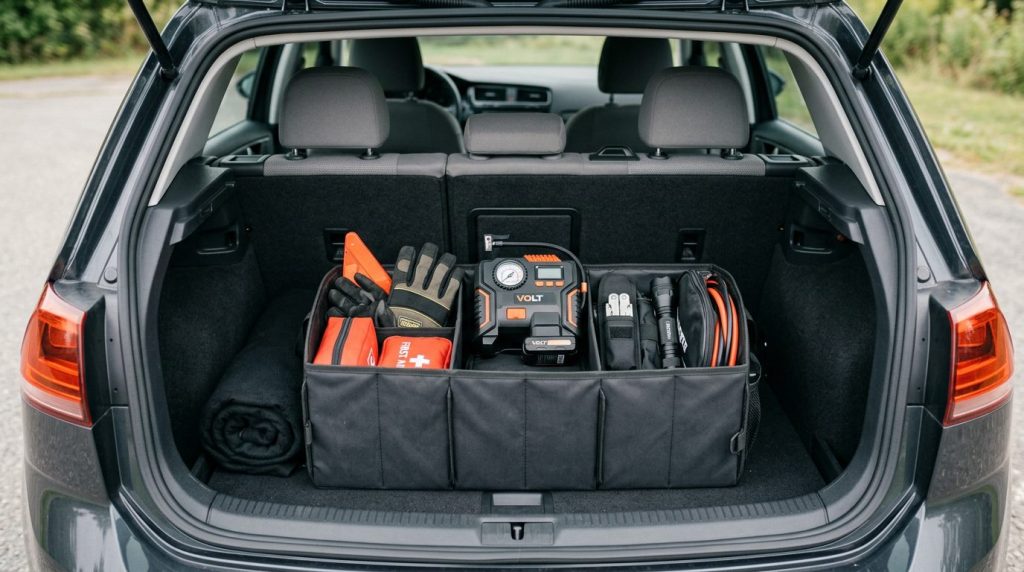
- People building a lightweight emergency kit without bulky gear
Who Should Skip It
Likely a weak fit for:
- Buyers who regularly inflate larger tires from very low PSI
- Users needing long repeated sessions on one charge
- Drivers who prefer a stronger compressor-style inflation pace
- Heavy-duty use cases (large truck/trailer/RV-like conditions)
Better Alternatives by Use Case
If Airmoto is close but not ideal, these categories are often better:
- Need stronger 12V consistency: compressor-style options like VIAIR 88P class
- Need hybrid power flexibility (battery + 12V + AC): DEWALT DCC020IB class
- Need lower-cost corded simplicity: budget 12V models like AstroAI/EPAuto class
Internal reads:
- Best Portable Tire Inflators for Cars
- Best Cordless Tire Inflators for Cars
- Best 12V Tire Inflators for Cars
- Tire Inflators Hub
Final Verdict
For convenience-first buyers, Airmoto can be a practical backup inflator.
This Airmoto tire inflator review suggests it is most useful when you treat it as a compact cordless maintenance tool, not a heavy-duty compressor replacement. If your use is regular top-ups and occasional roadside correction, it appears to be a reasonable buy. If your use is demanding and frequent, a stronger 12V or hybrid model is likely a better fit.
FAQ
Is Airmoto good for car tires?
For routine maintenance and occasional low-tire situations, it appears suitable based on published features and pressure range.
Is Airmoto enough for SUVs?
It can be enough for light-to-moderate SUV use, but buyers with frequent heavy inflation needs may want a stronger compressor-style option.
Is Airmoto better than 12V inflators?
Not universally. Airmoto is usually better for portability and ease; many 12V compressor-style units are better for sustained heavier workloads.
How important is auto shut-off on a portable inflator?
Very important for everyday users. It helps reduce over-inflation risk and removes guesswork during roadside use.
What’s the main buying mistake with Airmoto-type inflators?
Assuming compact cordless units perform like heavier compressor systems in all scenarios. Use-case fit matters more than headline PSI.
Sources
- Airmoto product page (specs/features):
https://getairmoto.com/products/airmoto - Airmoto FAQ page (use-case boundaries and timing context):
https://getairmoto.com/pages/faq